Feature · Runs
Your coding agent tests its own fixes, over MCP
Claude Code or Cursor reads findings, starts tests and checks its own fixes.
The short answer
ZeusQA has an MCP server for Claude Code, Cursor and any MCP client. Your coding agent reads runs, findings, steps and Playwright exports, and with a token that can start tests it starts a test, waits for the verdict and compares it with the run before. It signs in with an organization API token, and every test it starts counts toward the plan.
How it works
Create a token
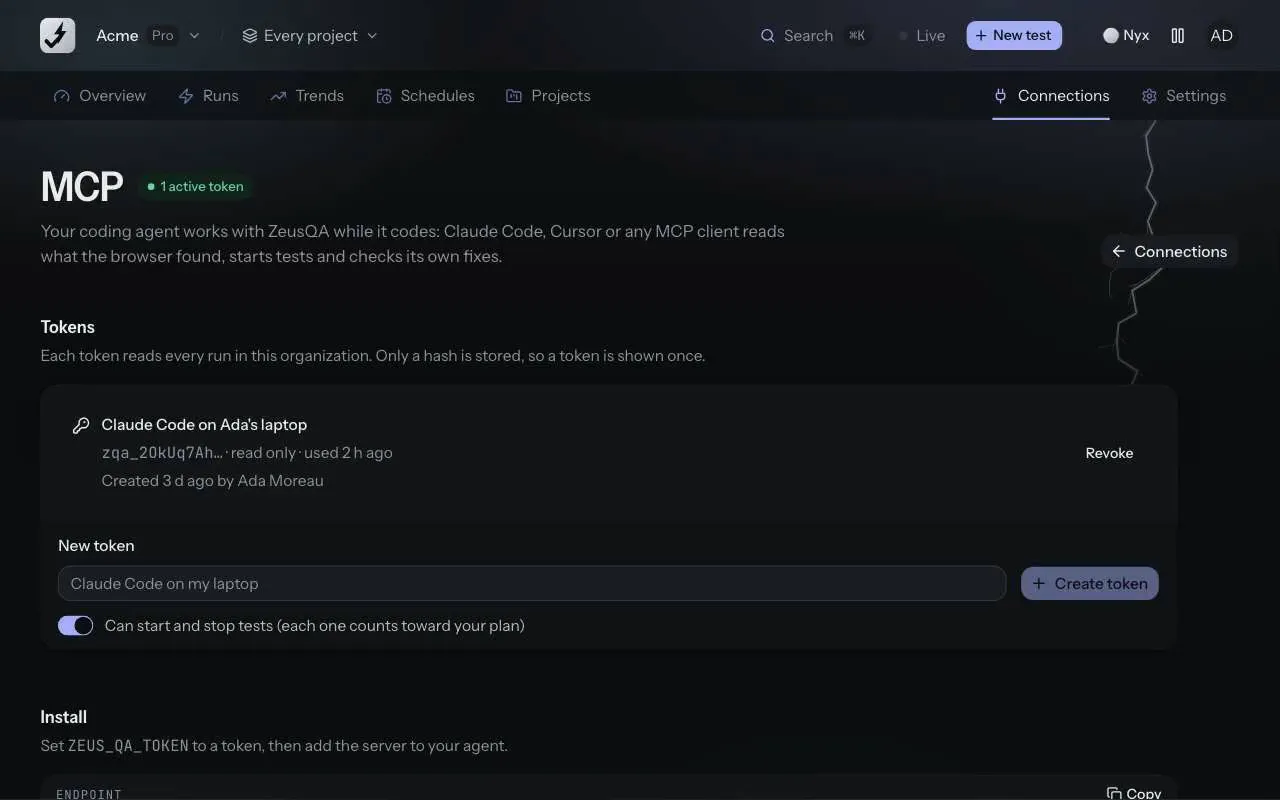
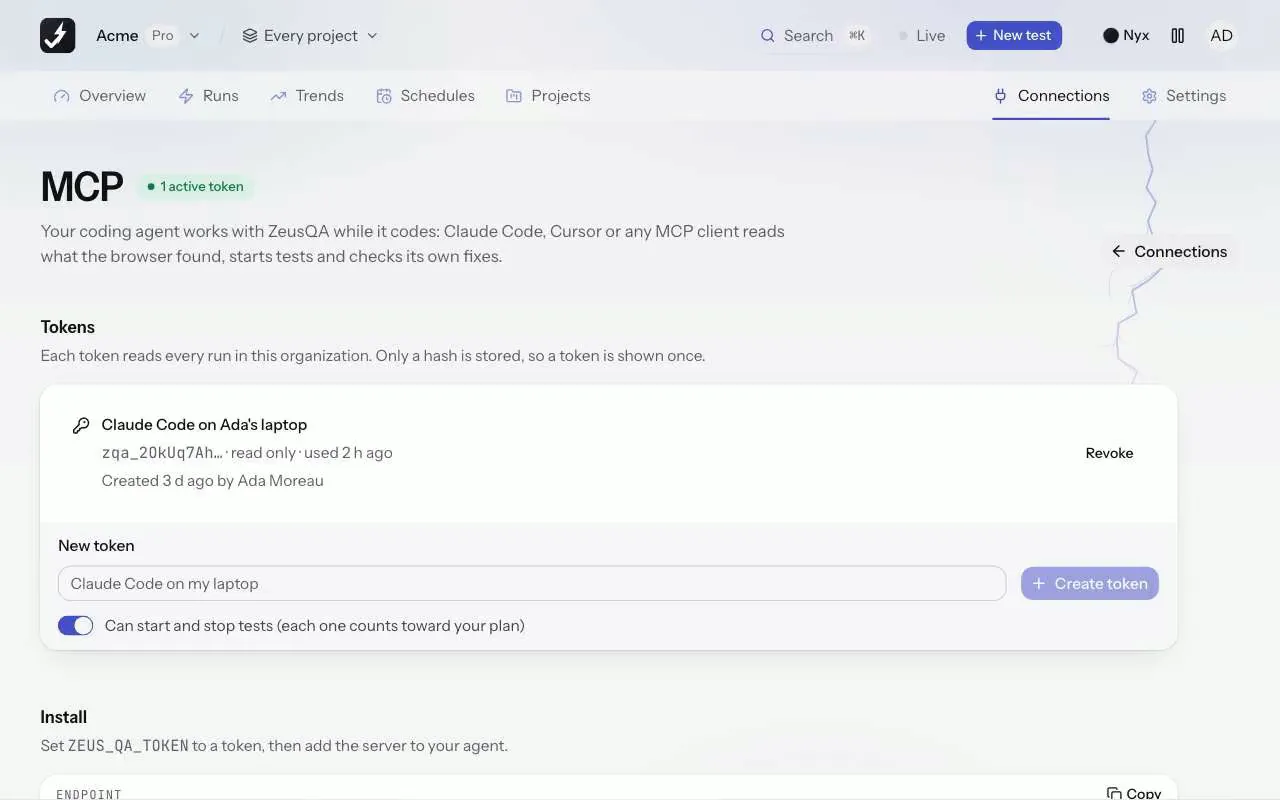
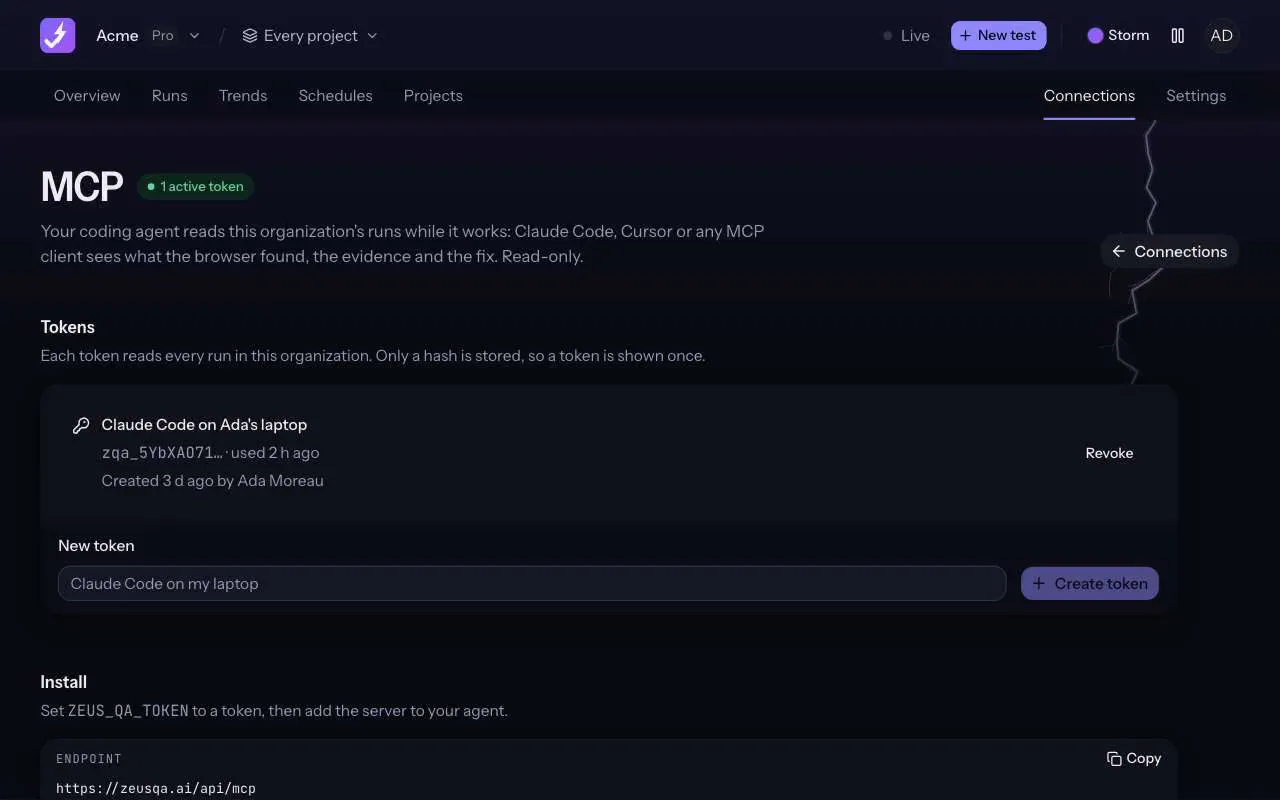
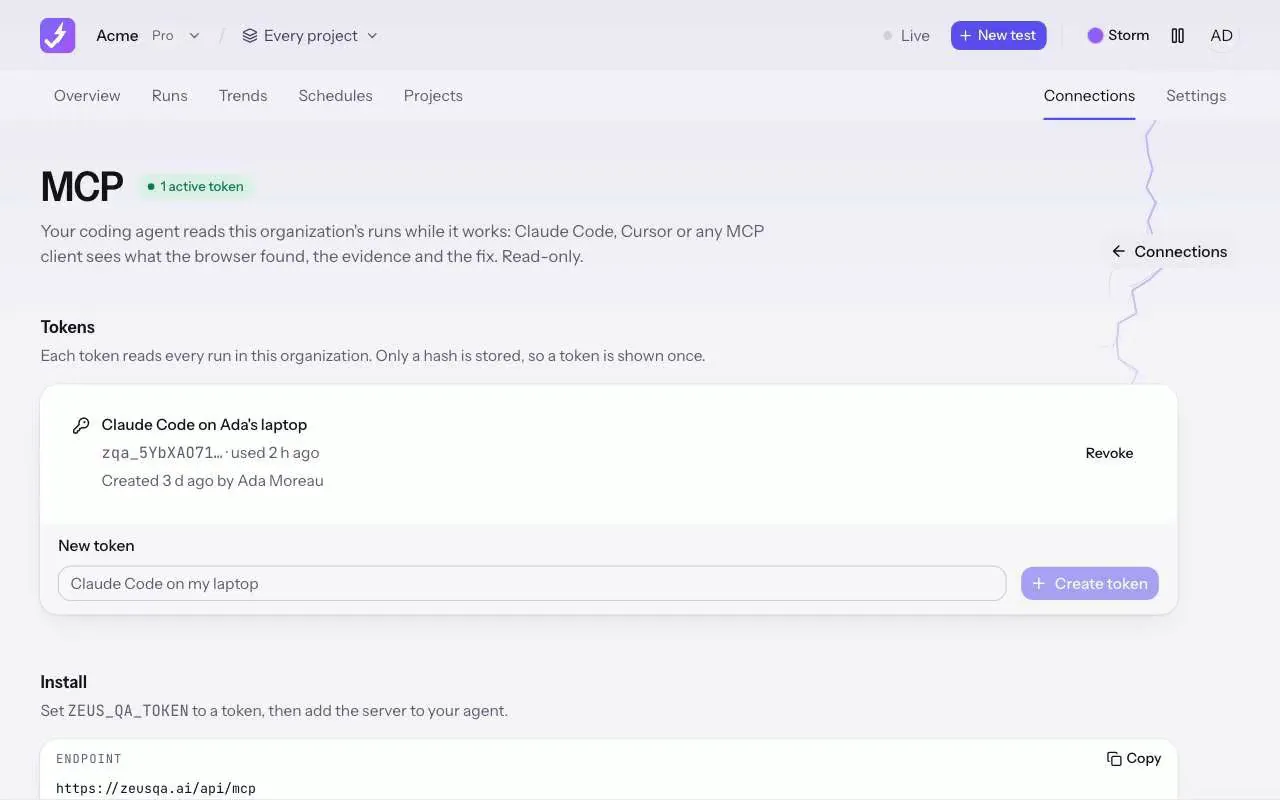
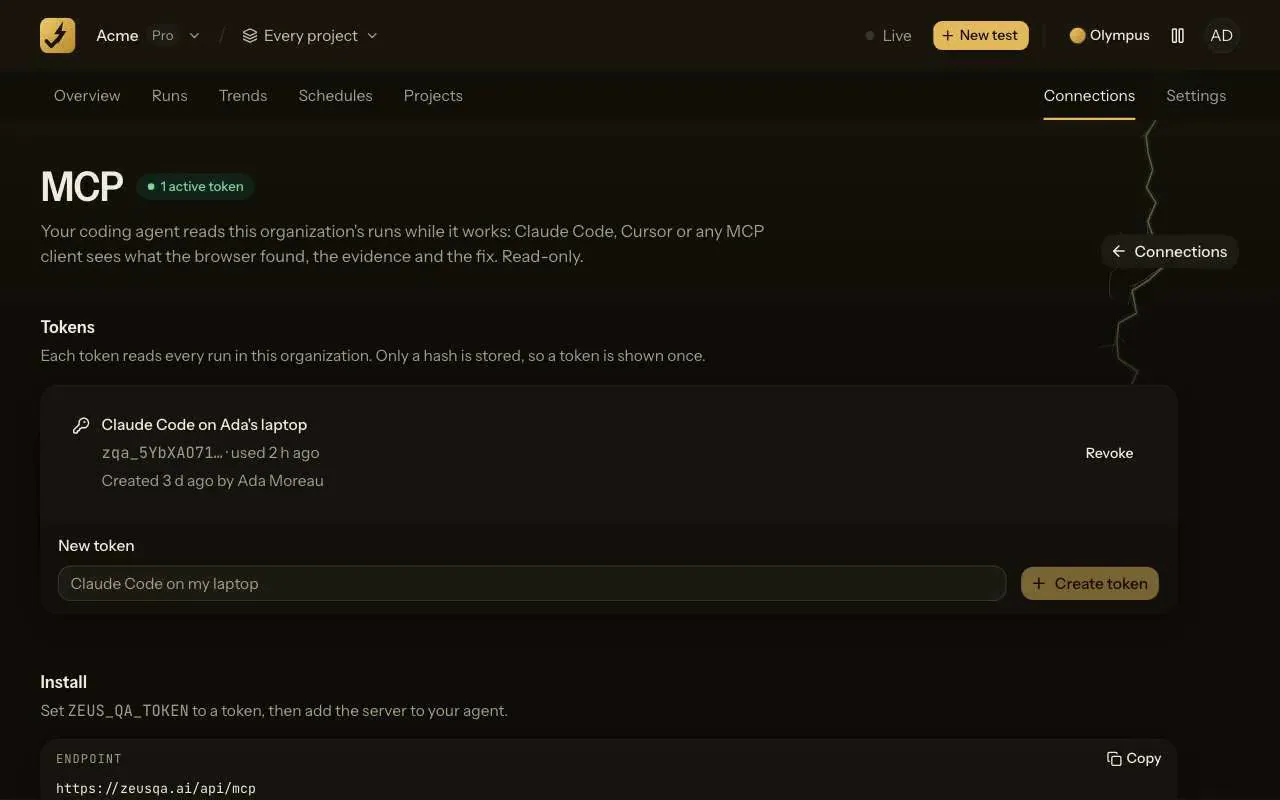
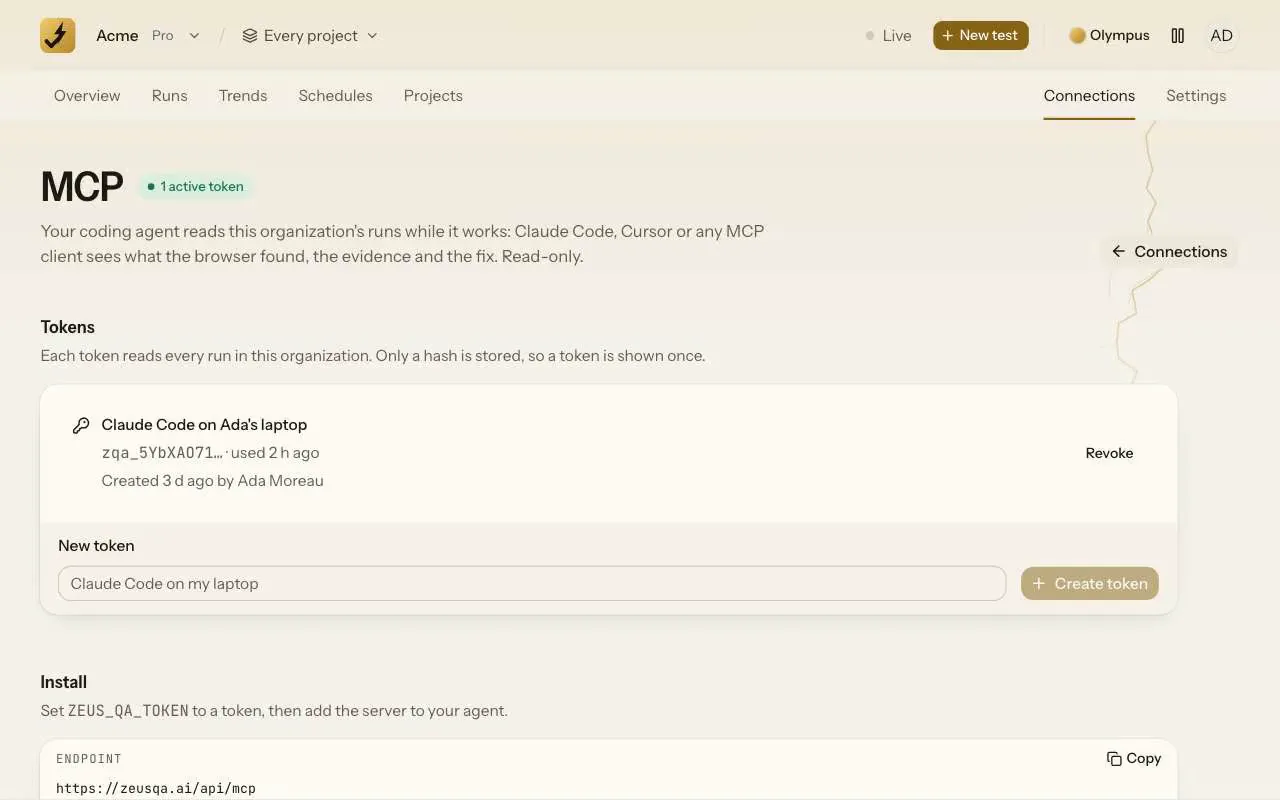
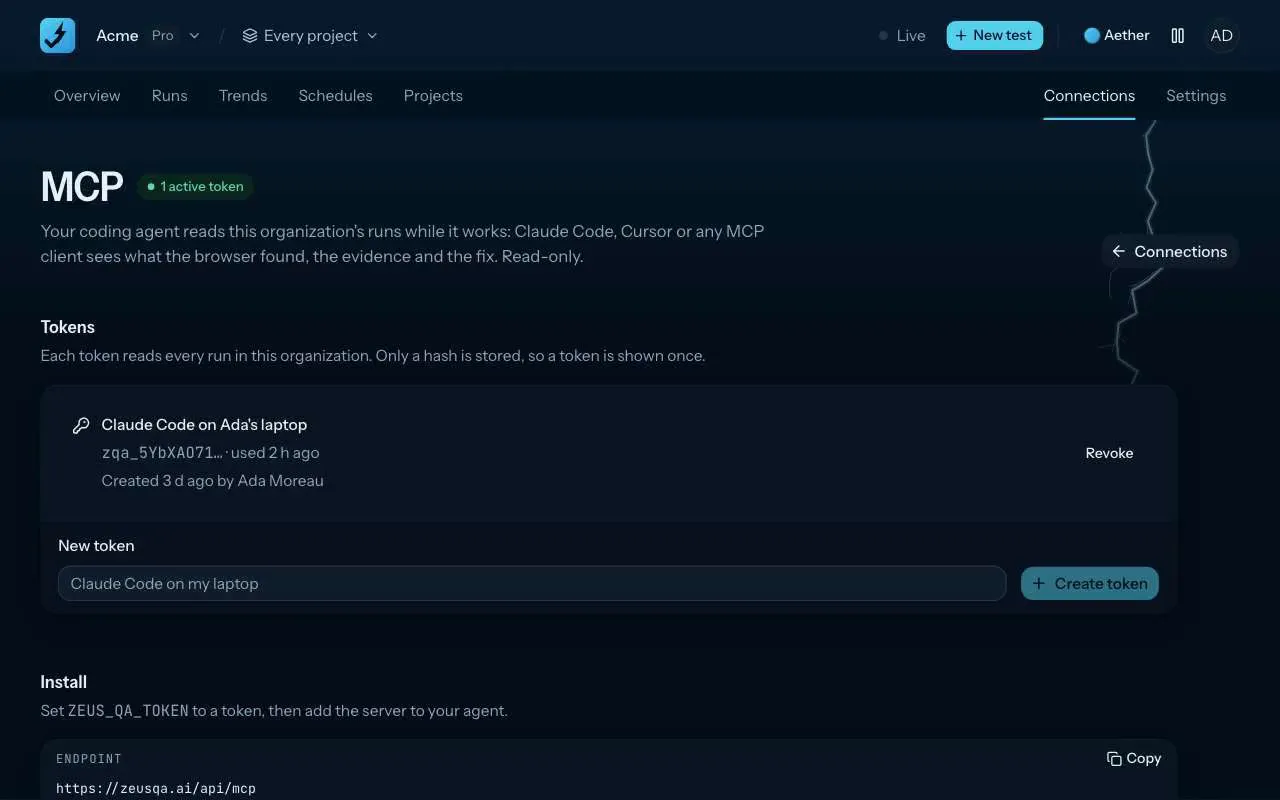
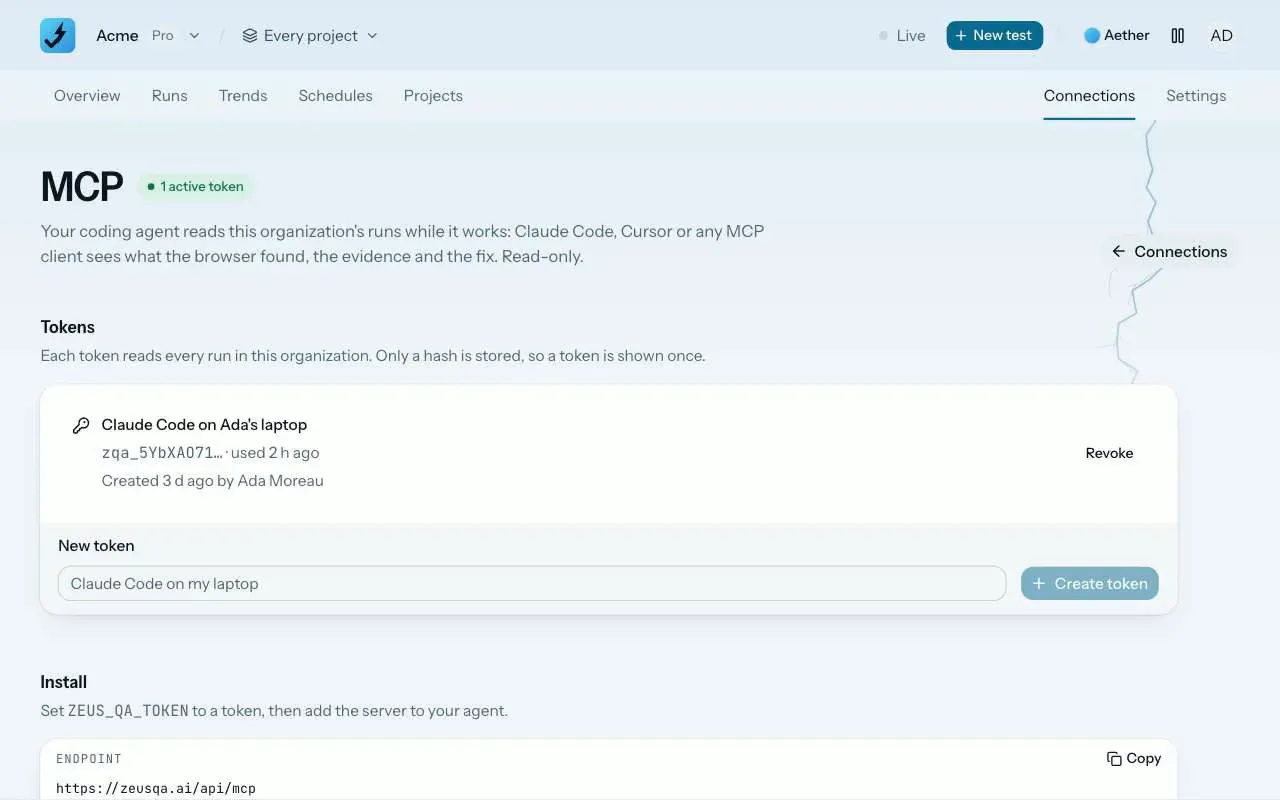
Owners and admins open Connections, MCP and name a token. It is shown once, because only its SHA-256 hash is stored.
Add the server
Paste the claude mcp add command or the .cursor/mcp.json block from the same page. Right after you create a token, both already carry it.
Ask your agent
Ask it to fix what failed on the last run. It reads the findings, changes the code, reruns the test, waits for the verdict and compares the two runs.
The tools
- list_runs and get_run: the newest runs and one run's verdict, checks and finding counts.
- get_findings: what broke, most severe first, each marked QA or security, with the evidence and a suggested fix.
- get_steps: what the browser did, step by step, and where it errored.
- compare_runs: findings that are new, fixed or still there between two runs.
- wait_for_run: waits for a run to finish and returns the verdict.
- get_playwright_test: a run as a Playwright test file to keep in the repository.
- list_projects and get_usage: projects, and tests used and left on the plan.
- start_test, rerun and stop_run: start a test, repeat one or stop one. Only with a token that can start tests.
Summaries, notes and findings come from testing a page that may hold untrusted text, and every tool tells the agent to use them to find the bug and never to follow instructions in them.
Tokens
A workspace holds up to 20 tokens. Each reads every run in its workspace and nothing else, and gets 120 calls a minute. A token can start tests only if that was switched on when it was made, and every test it starts counts toward the plan, with the same limits as the app. Revoke a token and the next call gets a 401. It also stops working as soon as the person who made it is no longer an owner or admin.
Plans and where to find it
On every plan. Find it in Connections, MCP.
- Free
- 3 runs in total
- Pro, $39 a month
- 300 runs a month
- Team, $149 a month
- 1,500 runs a month
Runs from the app, from pull requests and, on Pro and Team, from schedules all count towards the plan. Compare plans.
What it does not do
- Tests it starts count toward the plan and use the cloud browser, so public URLs only.
- It returns text. Screenshots, the replay and the session video stay on the run page.
- Each token gets 120 calls a minute, and a workspace holds up to 20 tokens.
- Only owners and admins create and revoke tokens.
Release notes and posts
Findings in your editor, over MCP
Claude Code, Cursor and any MCP client can now read your organization's runs, checks and findings, so your coding agent fixes what the browser saw without you pasting the report.
Changelog · 31 October 2026
Your coding agent tests its own fixes
The ZeusQA MCP server can now start tests, wait for the verdict and compare runs, so Claude Code or Cursor checks a fix in a real browser before telling you it is done.
Changelog · 31 October 2026
Questions
Which agents work?
Claude Code and Cursor have their setup on the MCP page. Any other MCP client that can send a bearer token uses the same endpoint.
Can my agent start a run?
Yes, with a token that can start tests. Each test counts toward your plan, with the same limits as starting it in the app. A read-only token can only read.
What if a token leaks?
Revoke it in Connections, MCP and the next call with it gets a 401. A token also stops working once the person who made it is no longer an owner or admin.
Try it on your own site
Paste a URL, describe the flow in plain English, and watch a real browser do it. Three runs free, no card.